
Imagine your employees facing invisible daily dangers at work, impacting their health and your company's productivity. That's where an industrial hygiene risk assessment comes in.
In this post, we'll walk through an example of an industrial hygiene risk assessment, showing you exactly how to identify, evaluate, and control potential health hazards in your workplace.
Why Conduct an Industrial Hygiene Risk Assessment?
An industrial hygiene risk assessment is critical for several reasons:
- Protect employee health and well-being: Identifying and controlling workplace hazards keeps your team safe and healthy.
- Comply with OSHA regulations: Risk assessments are required under the Occupational Safety and Health Act to ensure a safe work environment.
- Reduce absenteeism and turnover: Healthier employees mean fewer sick days and a more stable workforce.
- Improve productivity: Employees who feel safe and comfortable can focus on doing their best work.
- Mitigate legal and financial risks: Proactively addressing hazards reduces the likelihood of costly accidents, injuries, and legal issues.
The 5 Steps of an Industrial Hygiene Risk Assessment
Conducting an industrial hygiene risk assessment involves five key steps:
- Identify potential health hazards
- Evaluate exposure levels
- Assess health risks
- Implement control measures
- Document and review
Let's dive into each step in more detail.

Step 1: Identify Potential Health Hazards
The first step is to recognize the various types of health hazards that may be present in your workplace:
- Physical hazards: Noise, radiation, temperature extremes, vibration
- Chemical hazards: Dusts, fumes, vapors, gases, solvents, metals
- Biological hazards: Mold, bacteria, viruses, animal droppings
- Ergonomic hazards: Repetitive motions, awkward postures, lifting, pushing, pulling
Walk through each work area and task, observe processes, and talk to employees. Review safety data sheets (SDSs) for chemicals used. Consider maintenance activities, off-site work, and emergencies. The goal is to create a comprehensive inventory of potential hazards.
Step 2: Evaluate Exposure Levels
Once you've identified the hazards, you must understand how employees are exposed and to what extent. This typically involves:
- Air sampling and monitoring: Use personal and area air samplers to measure airborne concentrations of specks of dust, fumes, vapors, etc. over a representative period.
- Direct-reading instruments: Measure real-time levels of gases, noise, radiation, etc.
- Bulk sampling: Collect samples of materials for lab analysis of composition and contamination.
- Exposure modeling: Estimate exposures based on chemical properties, usage rates, ventilation, etc.
Compare your sampling results to permissible exposure limits (PELs) set by OSHA or recommended by entities like the American Conference of Governmental Industrial Hygienists (ACGIH). Also, consider the duration and frequency of exposures.
Step 3: Assess Health Risks
With exposure data in hand, evaluate the potential health risks to employees. Consider:
- Likelihood and severity of health effects: How likely is an exposure to cause harm, and how serious would the health impact be?
- Acute vs. chronic effects: Some exposures can cause sudden, short-term health issues, while others may lead to long-term illnesses that develop over years.
- Individual risk factors: Employees with pre-existing health conditions, allergies, or compromised immunity may be more susceptible to certain hazards.
A risk assessment matrix is a helpful tool to prioritize hazards based on their likelihood and potential impact. Assign each hazard a risk rating or score to guide your control efforts.
| Severity | Likelihood | Risk Level |
| Serious health impact | Very likely | High |
| Moderate health impact | Somewhat likely | Medium |
| Minor health impact | Unlikely | Low |
Step 4: Implement Control Measures
Now it's time to take action to reduce or eliminate the identified risks. Follow the hierarchy of controls to select the most effective measures:
- Elimination: Physically remove the hazard (e.g., switch to a non-toxic chemical)
- Substitution: Replace the hazard with a safer alternative (e.g., use a less harmful solvent)
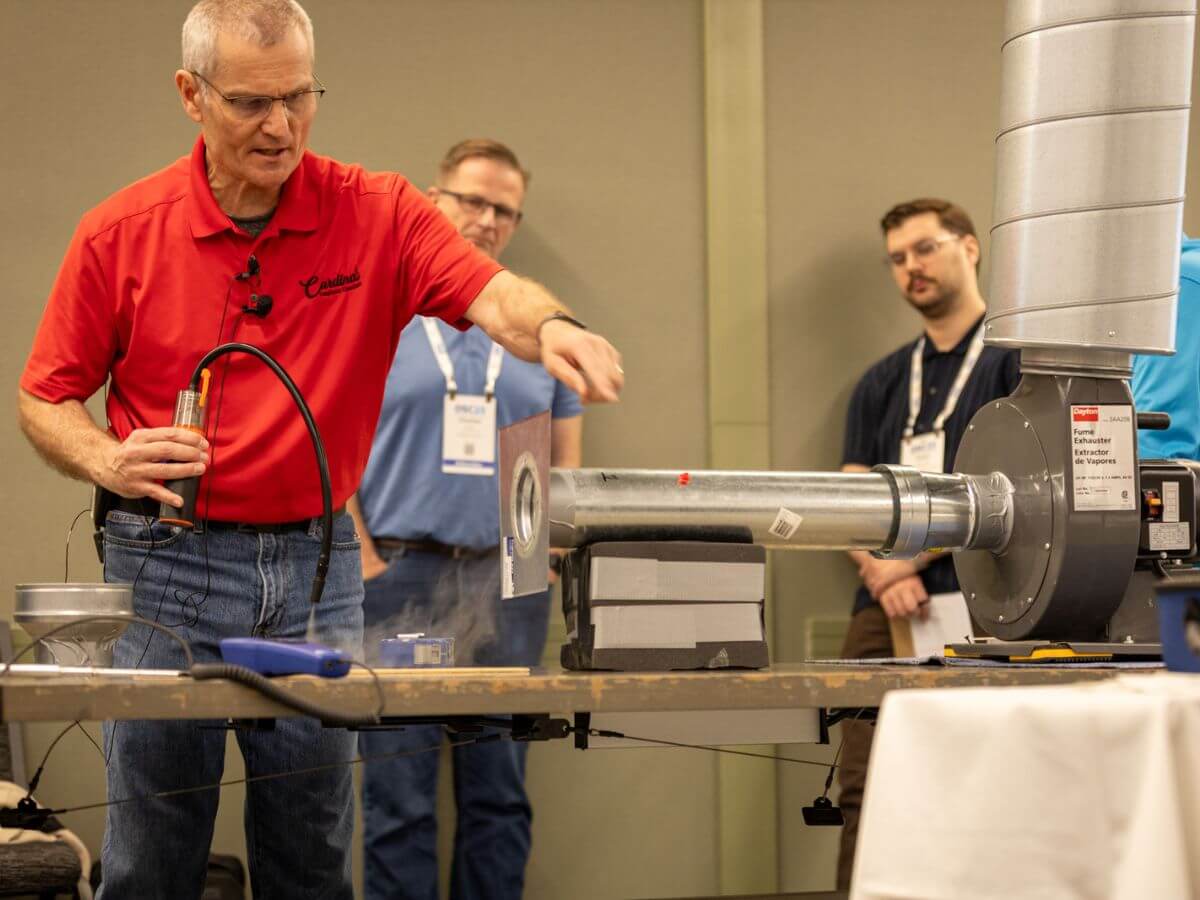
- Engineering controls: Isolate workers from the hazard (e.g., install local exhaust ventilation, enclose noisy equipment)
- Administrative controls: Change work practices to reduce exposures (e.g., rotate jobs, maintain equipment, provide training)
- Personal protective equipment (PPE): Protect workers with gear like respirators, gloves, safety glasses, hearing protection
Often a combination of controls is necessary for optimal risk reduction. Prioritize the most serious risks and most feasible solutions.
Step 5: Document and Review
Record your industrial hygiene risk assessment findings and control measures in a clear, organized report. Include:
- Description of the work areas and tasks assessed
- Hazards identified and exposure levels measured
- Risk ratings and prioritization
- Recommended controls and implementation timeline
- Roles and responsibilities for control actions
Communicate the results to managers, supervisors, and employees. Provide training on the hazards and proper control use. Keep your assessment updated as work conditions change. Establish a schedule to re-evaluate exposures and control effectiveness regularly.
An Example Industrial Hygiene Risk Assessment: Acme Manufacturing
Let's illustrate this process with a practical example. Acme Manufacturing produces small electronics parts, which involve soldering, spray painting, and assembly.
Identifying Hazards at Acme
An industrial hygienist walks through the Acme plant and observes the following potential hazards:
- Noise exposure from punch presses and grinding machines in the fabrication area, up to 95 dBA.
- Chemical exposure to solder fumes containing lead and flux vapors in the soldering stations.
- Ergonomic risks from repetitive hand movements and awkward positions in the assembly lines.
Evaluating Exposures and Assessing Risks
The hygienist conducts air sampling and noise monitoring to quantify exposures:
- Personal air samples on solderers show lead levels up to 0.05 mg/m3 (PEL is 0.05 mg/m3) and flux fume levels up to 0.6 mg/m3 (recommended limit is 0.4mg/m3).
- Noise dosimetry on fabrication workers shows time-weighted average exposures of 92 dBA (PEL is 90 dBA).
- The risk assessment matrix ranks lead and noise as high-priority hazards based on exposure levels and health consequences. Flux fumes and ergonomic risks are a medium priority.

Implementing Controls at Acme
Based on the assessment, Acme implements the following controls:
- Engineering:
- Local exhaust ventilation hoods at soldering stations to capture fumes
- Acoustic enclosures and silencers on noisy machines
- Administrative:
- Job rotation between soldering and assembly tasks to reduce duration of exposures
- Preventive maintenance of ventilation systems and machines to ensure the effectiveness
- PPE:
- Respirators with organic vapor/acid gas cartridges and particulate filters for soldering
- Ear plugs and ear muffs in high-noise areas
Documenting and Reviewing the Assessment
The hygienist prepares a report detailing the hazards, exposure levels, risks, and recommended controls. Acme assigns responsibility for each control item and sets a timeline for implementation.
All employees receive training on the hazards and proper use of the new controls. Supervisors perform regular checks to ensure compliance. The hygienist returns quarterly to re-evaluate exposures and adjust controls as needed.
After the implementation of the above controls, Acme will then re-assess the operations to determine the effectiveness of the controls which were implemented. After the re-assessment, PPE may be adjusted accordingly.
Your Turn: Conducting Your Own Industrial Hygiene Risk Assessment
Now that you've seen an example of an industrial hygiene risk assessment in action, it's time to apply these steps to your workplace. Remember to:
- Identify all potential physical, chemical, biological, and ergonomic hazards
- Evaluate exposures through air sampling, noise monitoring, etc.
- Assess health risks using a risk matrix or similar tool
- Implement effective control measures following the hierarchy of controls
- Document your findings and communicate the results to your team
You don't have to tackle this process alone, let Cardinal Compliance Consultants guide you through the process.
Uncover and Control Hidden Hazards with Cardinal Compliance Consultants
An industrial hygiene risk assessment is a powerful tool to uncover and control hidden hazards in your workplace. By systematically identifying, evaluating, and mitigating risks, you create a safer, healthier environment for your employees.
Reduced exposures lead to reduced illnesses, injuries, and absenteeism - boosting productivity and morale. A proactive approach to industrial hygiene also demonstrates your commitment to compliance and social responsibility.
With the step-by-step guidance and example shared in this post, you now have a roadmap to conduct your own assessments. Make industrial hygiene a regular part of your business operations and reap the benefits of a thriving, resilient workforce.
Ready to uncover and control the unseen hazards in your workplace? Our team of Certified Industrial Hygienists at Cardinal Compliance Consultants is here to help.
Contact us today for expert guidance on conducting your industrial hygiene risk assessment. We offer comprehensive services including:
- On-site hazard identification and exposure monitoring
- Risk assessment and prioritization
- Customized control recommendations
- Employee training and education
- Ongoing IH program development and support
Together, we'll create a safer, healthier work environment for your team. Protect your people and elevate your business with Cardinal Compliance - your partner in industrial hygiene excellence.